
Garnet: Passion and Strength
History and Usage:
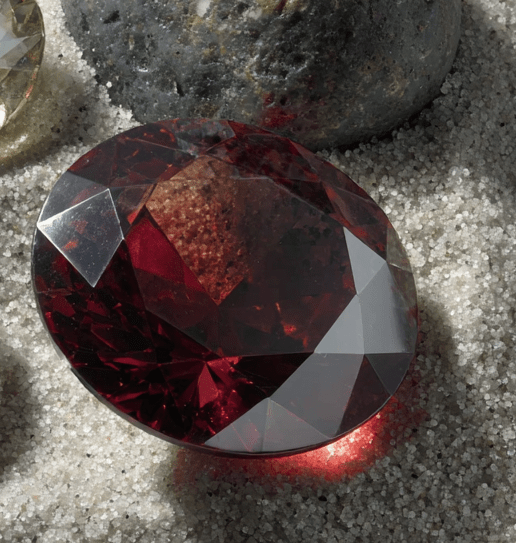
Garnets, with their red hues, have a history as vibrant as their colours. This gemstone has been forever admired and is often associated with passion and love. The name “garnet” is believed to be derived from the Latin word “garanatus,” meaning “seed-like,” in resemblance to pomegranate seeds.
Throughout history, garnets have been used in jewelry and ornamentation. They were particularly favored by ancient Egyptians and Romans, who considered them a symbol of light, as the stone could glow in dimly lit spaces. In ancient times, garnets were believed to have protective qualities, shielding the wearer from harm.
Geological Facts:
Garnets appear in a spectrum of colours, including red, green, orange, and even rare blue. The most common variety is the deep red almandine garnet, which derives its color from iron. I specially like Garnets from Brazil, because they have a purple-berry tonality that is simply gorgeous!
Garnets often have a distinctive brilliance and are prized for their exceptional hardness, making them an ideal choice for jewelry.
Garnets are found in various geological settings, from metamorphic rocks to alluvial deposits. They have been discovered in locations worldwide, including India, Sri Lanka, and United States. Some varieties are used in industrial applications due to their abrasive properties.
Popular Beliefs and Symbolism:
Garnets have long been associated with passion, love and vitality. They are believed to enhance one’s self-esteem and emotional balance. In some belief systems, garnets symbolize enduring friendship and loyalty, making them a fitting choice for gifts and tokens of affection.
Cultural Significance:
Garnet has a rich cultural history and has been valued for its beauty and symbolism across various civilizations. In the Middle Ages, garnet jewelry was particularly fashionable. During the Victorian era, garnets were often used in sentimental jewelry, and they symbolized deep affection and devotion.
Garnets were highly prized by ancient Egyptians and often used as gemstones and in jewelry. They believed that garnets provided protection in the afterlife.
Romans favored garnets for their decorative appeal and believed the gemstone symbolized courage and vitality. Garnet jewelry was popular, especially in the form of signet rings.
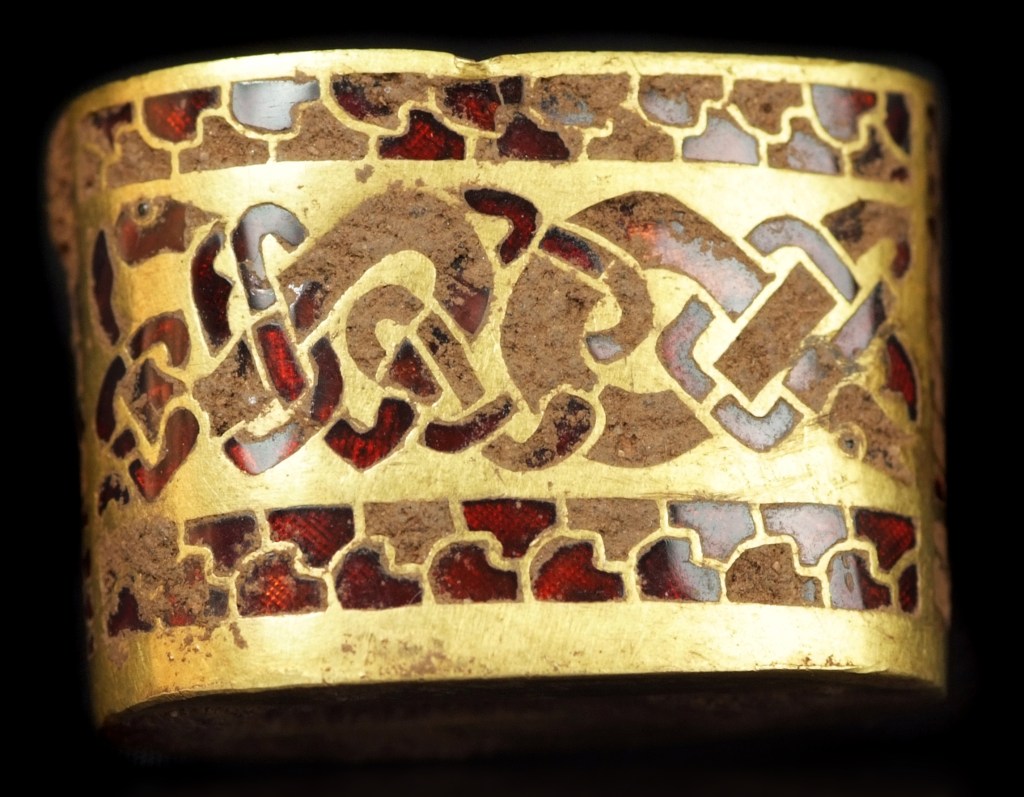
One of the most significant discoveries demonstrating the importance of this stone in our history is the Staffordshire Hoard, with more than 3,500 pieces of Garnet jewelry incrusted in gold and silver. It is the largest Anglo-Saxon hoard ever found, described by experts as one of the finest collections of early medieval artifacts ever discovered. The workmanship is high in this warrior’s treasure, and the Garnets are exquisitely beautiful. Most objects are martial in nature, as helmets, buckels, swords and weapon’s ornaments.
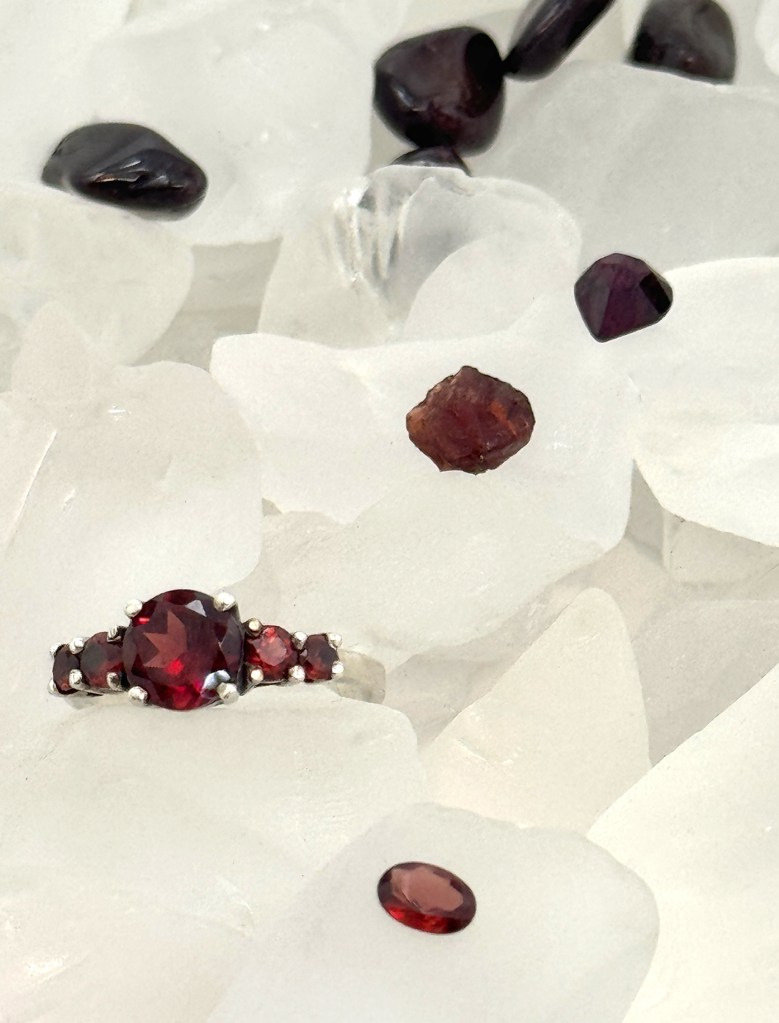
Today, garnets continue to be loved for their beauty and versatility. They are often featured in rings, necklaces, and earrings. The gem’s unique colors and exceptional hardness make it a beloved choice for both contemporary and vintage-inspired jewelry.
Curiosities:
The famous Russian jeweler Carl Fabergé incorporated garnets into some of his intricate creations, contributing to their beauty and significance.
With their passionate red hues and enduring symbolism, Garnets remain a cherished gemstone for those seeking to express passion, love, loyalty and strength. Whether admired for their aesthetic charm or their meaning, garnets continue to captivate hearts and inspire creativity in the realm of jewelry design.


Leave a comment