

Obsidian: Mysterious Elegance


History
Obsidian, the mysterious black volcanic glass, has a history intertwined with human civilization dating back thousands of years. It was highly valued by ancient cultures for its sharpness and used for crafting tools and weapons. Its name is derived from the ancient Roman Obsius, who is believed to have discovered the stone in Ethiopia.
Obsidian’s sharp edges made it perfect for for cutting, and it was used for creating arrowheads, blades, and even mirrors. Archaeological findings have revealed its presence in ancient societies around the world, from the Mayans in Central America to the ancient Egyptians.
Geological Facts
Obsidian is found worldwide, with significant deposits in places like the United States, Mexico, Japan, and Italy.
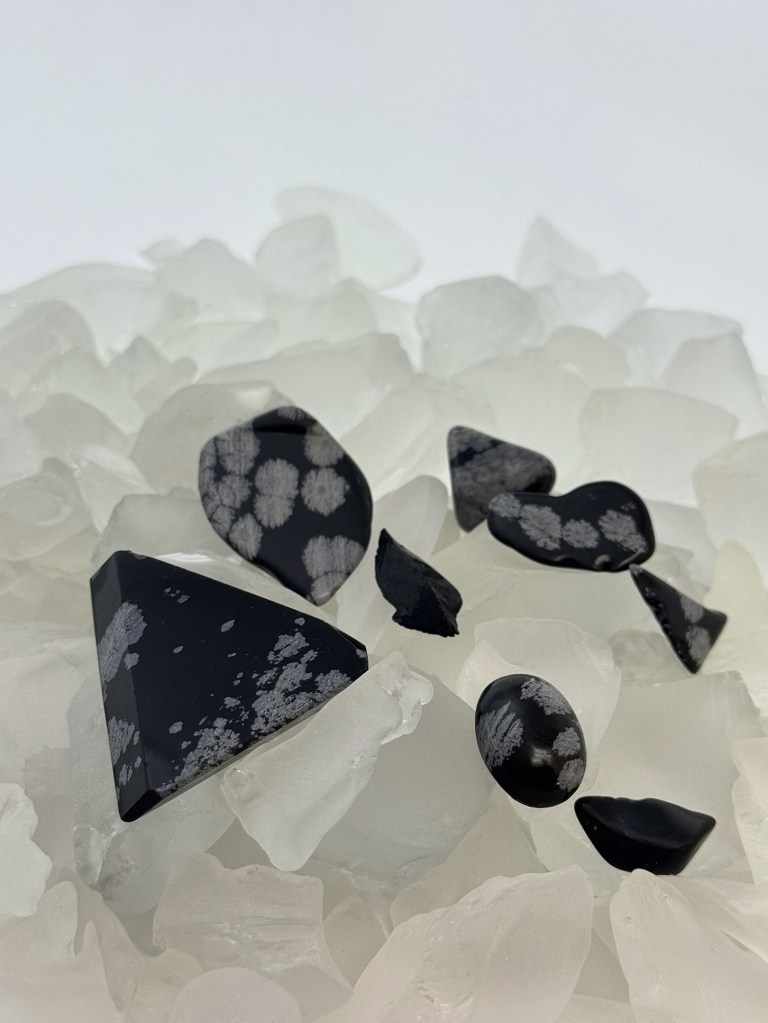
Born from volcanic forces, it is a naturally occurring glass formed when molten lava cools rapidly. Its smooth, glossy surface and deep black color give it a mysterious and sophisticated texture. Obsidian can also appear in other colours, such as brown, mahogany, snowflake patterns, or even sheens of gold or silver.
Although primarily black, obsidian can exhibit various colours and patterns due to impurities, inclusions, or the presence of bubbles during formation. They can be green, brown, mahogany. Some have grey snowflake patterns, or even sheens of gold or silver.
Culture and Lore
Obsidian has a rich history of myth and symbolism. It is often associated with protection, grounding, and spiritual purification. In many cultures, it is believed to reflect negative energy and act as a shield against psychic attacks. It’s also considered a mirror of truth and self-discovery. This stone is associated with Pluto and Saturn.
In the Occult tradition, Black Obsidian mirrors were used for scrying, a form of divination where one gazes into the reflective surface to gain insight into the past, present, or future.
Obsidian has deep-rooted cultural significance in various civilizations.
- Ancient Mexico: The Aztecs highly revered obsidian, associating it with the god Tezcatlipoca, the Smoking Mirror, who symbolized the embodiment of the night sky. Obsidian mirrors were believed to have divinatory properties and were used in ritualistic practices.
- Native American Cultures: Different Native American tribes used obsidian for tools and ceremonial purposes. The stone was valued for its sharp edges and played a role in spiritual rituals.
Obsidian have been part of humankind’s journey in many parts of the world, from Mesoamerica to ancient Greece. Today, our fascination for this beautiful and enigmatic stone continues, in our jewelry and as a collectible gemstone.
Grading and Quality
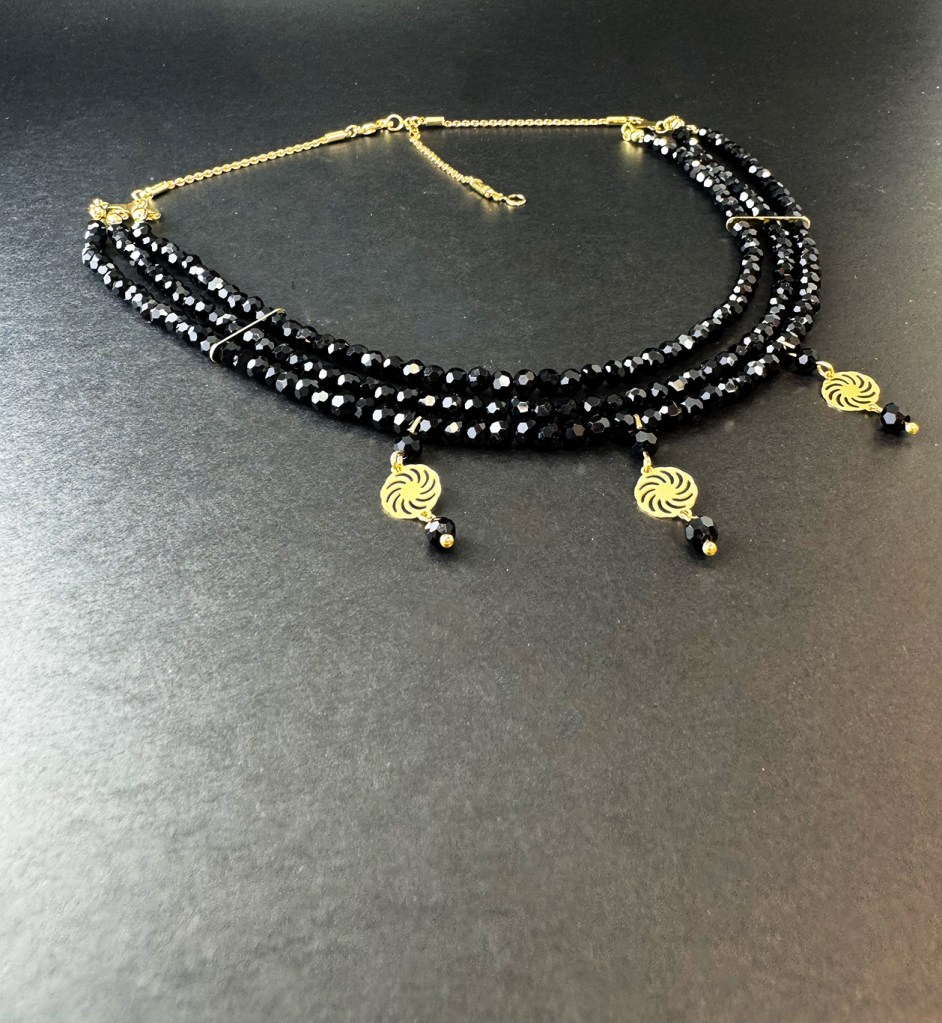
The most highly prized obsidian is jet-black, free of inclusions or bubbles, and expertly shaped or carved. Quality obsidian should have a smooth, glossy surface and can be fashioned into various shapes and objects. When faceted, because of it’s volcanic nature, has a wonderful shine and reflects light, creating and enchanting glow that is very attractive in jewelry.
Care and Use
Obsidian is easy to care for, but being a glass-like material, it should be handled with some caution to avoid chipping. Clean it with a soft cloth, water and mild soap. As with other stones, avoid exposing it to harsh chemicals.
With its rich history and distinctive properties, it remains an intriguing gemstone that has played an essential role in human development. Obsidians are part our history for thousands of years, as tools, art and spiritual objects. This beautiful stone continues to fascinate and inspire us today’s it did in the past, all over the world.
 Elspetra
Leave a comment